


If this is your company, CONTACT US to activate Packbase™ software to build your portal.

Challenge: Packaging to facilitate automation and reduce cost
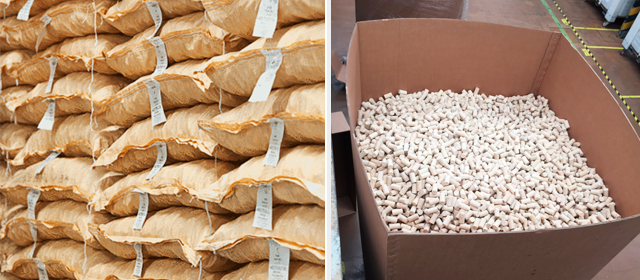
Most cork producers use a laborious process that requires a lot of time and packaging materials. Wine corks are manually packed into bags of raffia / plastic which is closed by stitching or gluing the ends. Once closed, all the bags with wine corks are manually positioned on pallets for transport / storage.
Our Approach: Bigger volumes, faster discharge
We focused our efforts on developing a square or octagonal corrugated cardboard container, capable of containing up to 75,000 - 90,000 wine corks without deformation, with an opening in front for discharging the product.
The final result is a corrugated cardboard box (1220x1150x2500 mm) with two dispensers on opposite sides of the packaging to reduce discharge times. The self-assembly bottom brings additional flexibility and is suitable for use in both truck transport and shipping containers.
Results: Faster, cheaper, easier packaging
- Lower labour costs thanks to reduced packing time
- Lower transport costs with optimisation of space in storage and transport
- Improved environmental performance as the solution is almost fully recyclable and use much less material than previous solution
- Increased ease-of-use and reduced discharge times for end user.