


If this is your company, CONTACT US to activate Packbase™ software to build your portal.




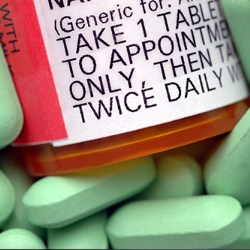
Unlike some consumer products, there are strict rules regulating the labelling of pharmaceutical goods. Whether it's for everyday healthcare items that can be purchased in the supermarket, or stronger, prescription-only medicines, there are specific rules that manufacturers need to follow.
In the UK, the Medicines and Healthcare products Regulatory Agency (MHRA) approves all packaging and labelling for pharma products sold in the country, and it can also block any product from hitting the shelves if the labelling doesn't comply with the relevant rules.
The pharmaceutical industry, as well as pharmaceutical labelling providers are able to make use of a wealth of online resources aimed at ensuring they follow all the rules. Here are just a few things manufacturers need to know:
The basic rules of pharmaceutical labelling
Above all, pharmaceutical labels must be clear. That is, both healthcare professionals such as doctors and pharmacists, as well as patients themselves, need to be able to read the labels with ease. This means no fancy fonts, small typeface or stylish colour schemes. The key here is to keep labels as simple and fresh as possible.
It's also worth noting that, under both UK and EU law, all information on licensed medicines must be printed directly onto the packaging. Over-labelling is banned, so it makes sense to work with the packaging and labelling suppliers to ensure this rule is adhered to.
One innovative way of ensuring all the relevant information is appropriately displayed is to make use of a Fix-a-Form®. Here, the multi-page label fold out of the packaging, allowing the manufacturer to fit more information onto the same surface area and for the information to be kept securely on the product.
Get the warnings right
By law, manufacturers are obliged to display any warnings or possible risks relating to their products on the packaging, again as clearly as possible. If a product is a controlled drug, then it needs to have the letters 'CD' in an inverted triangle displayed prominently on the packaging.
Furthermore, pharmaceutical labels must also include warnings about the safe use of medicine. For instance, strict rules are in place for products that contain paracetamol, while the MHRA also has strong guidelines for artwork and packaging style for products containing drugs such as codeine or dihydrocodeine. Again, it's always worth researching the relevant rules rather than running the risk of having a product label turned down.
Remember, if a product is to be sold in a multi-pack, each individual unit needs to be properly labelled.
Don't forget the braille!
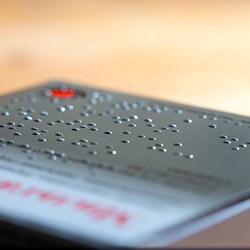
Where pharmaceutical labelling differs from that of most other products is that, by law, they also need to be produced in braille.
This means that all medicines must have the product name clearly displayed in braille on the label. Some labelling specialists will put this on top of the printed word to save space, and firms specialising in pharmaceutical labelling will have experience of working with organisations such as the Royal National Institute for the Blind to make products suitable for blind and partially-sighted consumers.
Again, it pays to research this area thoroughly. The EU and UK rules relating to pharmaceutical labelling are very strict and almost completely inflexible – and with good reason. By working with a specialist in this type of labelling, and by conducting independent research, satisfying the authorities is relatively easy to do. Going it alone or relying on a labelling firm without any experience in this area of the market can, however, be very costly indeed, both in terms of time and money.