


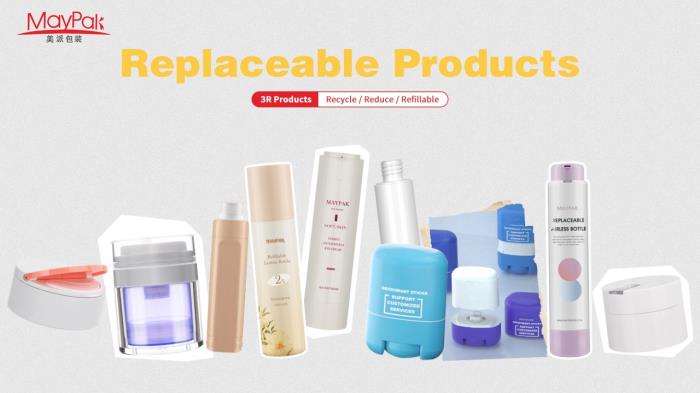

With growing environmental awareness and the rise of sustainable practices, eco-friendly cosmetic packaging has become an industry trend. Compared to conventional packaging, eco-friendly options differ significantly in materials, design, production, user experience, and recycling.
Material Selection
Eco-friendly packaging often uses renewable, biodegradable, or recyclable materials like glass, aluminum, paper, bamboo fiber, and bio-based plastics (e.g., PLA). These materials reduce waste and offer sustainable disposal options. For instance, glass and aluminum can be recycled indefinitely, while bio-based plastics degrade under specific conditions. Conventional packaging often relies on plastics like PP and PET, which are harder to degrade and contribute to pollution.
Design Philosophy
Eco-friendly designs focus on "reduce, reuse, recycle." Minimalist designs reduce material use, refillable containers extend product life, and single-material packaging simplifies recycling. Conversely, conventional designs often prioritize visual appeal, relying on complex structures and non-recyclable materials that increase waste.
Production Processes
Eco-friendly production emphasizes energy efficiency and emission reduction. For instance, water-based inks reduce VOC emissions, low-temperature processes conserve energy, and clean energy minimizes carbon footprints. Conventional production, in contrast, often involves higher energy consumption and pollutant emissions.
User Experience
Eco-friendly packaging combines functionality with user convenience. Glass offers excellent sealing, aluminum is lightweight and durable, and bio-based plastics meet daily needs. Many eco-friendly designs also enhance usability with lightweight structures and ergonomic features. While conventional packaging may excel in some performance areas, its environmental impact is a major drawback.
Recycling and Disposal
Eco-friendly packaging excels in recyclability and biodegradability. Sorted collection enables efficient recycling, while biodegradable materials naturally decompose without harming the environment. Glass and aluminum can be recycled indefinitely, while bio-based plastics degrade under composting conditions. Conventional packaging, particularly plastics, degrades slowly and has low recycling rates, often polluting ecosystems.
Consumer Perception
With rising environmental awareness, consumers increasingly prefer eco-friendly packaging. It reflects corporate responsibility and aligns with sustainable values. Studies show over 60% of consumers are willing to pay more for eco-friendly options. Conventional packaging, due to its environmental impact, is losing favor.
The differences between eco-friendly cosmetic packaging and conventional cosmetic packaging are not only reflected in materials and production processes but also in their long-term environmental impact and consumer preferences. Eco-friendly packaging, with its renewable, biodegradable, and low-energy characteristics, represents the future trend of the cosmetic industry.
As a company focusing on environmentally friendly cosmetic packaging materials, Maypak's choice of environmentally friendly packaging is not only a responsibility to the environment but also a commitment to consumers and the future.