



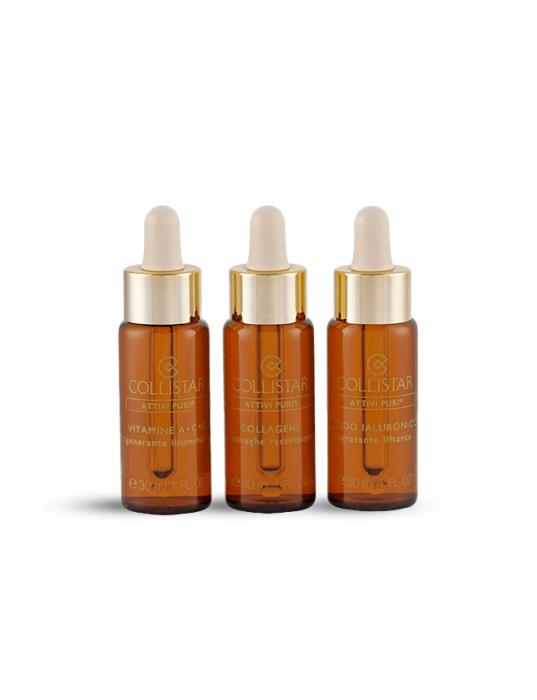

Users don’t really notice a glass dropper until they use one that works well... and then it’s hard to go back. In skincare and haircare, where formulas are more concentrated and textures lighter than ever, the way a product is dispensed shapes how it performs day after day.
Choosing a dropper as your product's pack changes the user experience. It slows the customer down just enough to be intentional. They draw up the product, see it in the pipette, and decide how much they actually need. That matters when a serum only requires three drops, or when a hair oil should touch the lengths, not flood the roots. Pumps and sprays tend to overdeliver; a dropper doesn’t. It gives control.
There’s also a practical cleanliness to it. Fingers never dip into the bottle, and the rest of the formula stays protected between uses. For sensitive skin treatments, scalp serums, or products used over time, that separation helps preserve both hygiene and performance.
Glass plays its part too. Paired with tinted bottles, droppers limit light exposure and oxidation — important for ingredients like vitamin C, plant extracts, and delicate oils. Only the amount you need is exposed, then the rest stays sealed away. A drop can be placed exactly where it’s useful, along a parting, on a dull area of skin, just on the ends of the hair. Nothing spreads where it shouldn’t.
And finally, there’s perception. A glass dropper feels deliberate, almost clinical, without being cold. It suggests care, precision, and potency. Not because it looks premium, but because it behaves that way.