


If this is your company, CONTACT US to activate Packbase™ software to build your portal.



The rise of influencers has cemented essential strategies when it comes to creating brand ambassadors. It’s no longer just about a celebrity paired with visual content. Social media has shifted the focus toward storytelling, production values, social contribution, and experience-driven products.
Packaging decoration can no longer be limited to simply “looking good”; it has become a strategic element for differentiating products and giving brand ambassadors clear talking points they can communicate in short segments before a user scrolls on. From perfumery and cosmetics to olive oil and premium spirits, packaging tells stories, conveys values, and anticipates the quality of what’s inside.
Packaging Trends Defining 2026
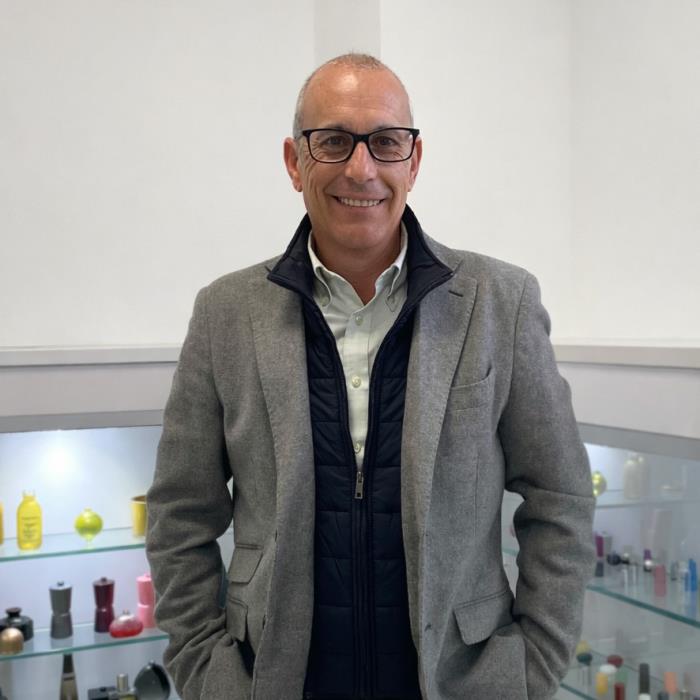
Today, we speak with Ricardo Roca, the Managing Director of Packaging Color Manufacturing, to explore the trends that will shape 2026, the growing importance of sustainability, and the key role decoration plays in brand storytelling.
1. Generation Z has begun to claim its own space in the market and, as often happens, it breaks with the preferences of its predecessors, millennials. Earth tones, beige, gray, and minimalism are now being challenged by a generation that embraces maximalism, bold color, and a more daring narrative. Looking ahead to 2026, which visual trends do you see gaining the most traction? Does the restrained millennial style still dominate, or are we heading toward a more saturated, extravagant wave?
What we’re seeing as we approach 2026 is a clear polarization. On one hand, a minimalist aesthetic remains, still valued for its timeless elegance. On the other, a strong maximalist current is emerging, driven especially by Generation Z, which favors intense colors, bold contrasts, and provocative visual storytelling.
At PCM, we’re preparing for this new landscape with developments that allow us to combine vibrant colors with sensory effects such as colored hot stamping, textured lacquering, and raised screen printing.
2. While these visual approaches may seem to move in opposite directions, both generations share an appreciation for sustainability and contributing to the well-being of the planet and society. How is PCM addressing the growing demand for sustainable solutions, particularly in a market like Europe, where environmental regulation is becoming increasingly strict?
It’s true that environmental regulation in Europe is advancing rapidly, but for us, this level of demand is an opportunity to lead change.
For more than 15 years, we’ve invested in processes that reduce our carbon footprint. We use sustainable inks and water-based paints, UV drying technology in screen printing that lowers energy consumption, and we power our operations with solar energy. In addition, we optimize every project to minimize waste, both in production and transportation.
But beyond the technical aspects, we believe sustainability is also emotional. Our approach is to support our clients in a realistic and effective transition toward more responsible decorated packaging; without sacrificing visual impact or brand positioning.
3. Europe has long been the epicenter of fashion in the Western world. In a market where design and aesthetics play such a crucial role, how much does decoration influence purchasing decisions for perfumes, cosmetics, and gourmet products? Is there something that, at first glance, tells consumers: “This is European. This is quality”?
Europe certainly has a very powerful aesthetic heritage. When consumers see a European perfume, olive oil, or spirit, they expect quality, history, and design.
Decoration has a huge influence on purchasing decisions. Well-executed screen printing, tactile textures, deep colors, or metallic effects translate into art, innovation, and quality.
In sectors such as perfumery, cosmetics, and gourmet products, packaging is part of the experience. That’s why decoration has the power to generate desire and build trust in a brand.
At PCM, we understand that our finishes are not just an added feature, but a vehicle for connecting the product with consumer perception.
4. Since we’ve touched on environmental awareness and the reputation of European luxury, what innovations in materials or processes are making it possible to balance luxury and sustainability without compromising the visual and tactile quality demanded by high-end brands?
One of today’s biggest challenges is proving that sustainability doesn’t mean giving up luxury. At PCM, we address this through both technical and aesthetic innovation.
For example, we’ve developed water-based lacquers that deliver a premium finish without the use of toxic solvents, and we apply UV-dried screen-printing techniques that reduce environmental impact. We also closely control and monitor our processes to reduce energy and raw material consumption.
5. From a brand storytelling perspective, influencers now communicate their sponsors’ value propositions more directly and clearly than ever. How does packaging decoration help build distinctive narratives in highly competitive sectors such as premium spirits or olive oil of Spanish origin?
Packaging decoration is, ultimately, the first chapter in a brand’s story. In sectors so closely tied to origin, like olive oil or artisanal spirits, the package doesn’t just inform; it conveys the brand’s values and history.
A color gradient, a texture… decoration is what transforms a container into a story. Every visual detail is an opportunity to connect with new audiences.
At PCM, we work closely with brands to shape that narrative through techniques that transform every bottle or jar into a meaningful expression of the brand.
Beyond the Pack
Packaging decoration has become a language of its own within branding, capable of connecting with increasingly demanding consumers who care deeply about aesthetics, sustainability, and authenticity. Our conversation with Ricardo Roca makes clear the transformation underway in this sector, driven both by regulatory pressure and by the pursuit of differentiation in high–value-added markets through visual and tactile storytelling, as well as a product’s sense of origin.
We thank PCM for sharing its vision of the future of decorated packaging and for its contribution to developing solutions that combine creativity, technology, and environmental responsibility. Without a doubt, the evolution of packaging decoration will remain a key element for brands seeking to stand out and inspire emotion in the years to come.